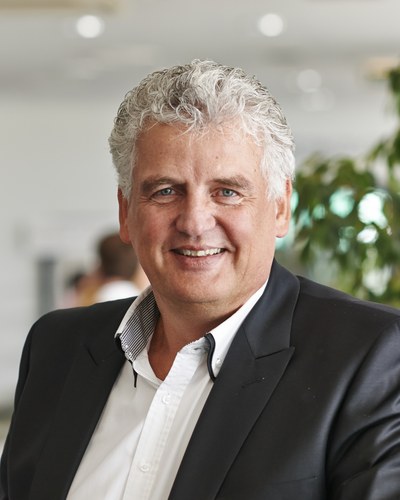
Stefan Schunke
MDT
Zahntechnisches Laboratorium Stefan Schunke GmbH, Forchheim, Germany
GERMANY
Session 40 · DAY 3 (Nov. 7, 2026) · 17:30–18:00 CET
Principles of Occlusal Biomechanics
Abstract
Occlusion plays a decisive role both in the management of TMD patients and in restorative work. For me, occlusion means far more than counting contact points, drawing the occlusal compass or quoting the biomechanical concept according to Polz or another occlusal philosophy. Occlusion is defined by a three-dimensional understanding — contacts must be assessed simultaneously in the horizontal, frontal and sagittal planes.
I begin with a simple question: what is the actual task of occlusion? In my view it has three: stabilizing the vertical dimension; holding and comminuting food; and maintaining the temporomandibular joint in position. From these follow concepts such as joint-protective morphology, defensive morphology, and the transformation of cusp tips into functional tips. Here I follow Slavicek’s principle of designing prosthetic restorations that are functionally suitable while defensively optimizing the masticatory organ in patients with parafunctional activity.
In smaller cases — a single quadrant, for example — prosthetics often allow only a reactive response to the existing situation, and established theoretical models are frequently called into question. How, then, should one proceed?
In complex cases, realignment of the dento-alveolar segments demands an extended prosthetic approach. Here the existing dental status and gingival conditions can rarely serve as a reference; skeletal landmarks must take their place.
The topic is presented through practical examples from both limited restorations and full-mouth rehabilitations, offering an overview of how I design occlusion, based on principles developed over 50 years of professional experience together with the relevant literature and scientific findings.
Learning Objectives
- Assess occlusal contacts three-dimensionally, in the horizontal, frontal and sagittal planes, moving beyond static contact-point analysis.
- Define and apply key concepts of occlusal design — joint-protective morphology, defensive morphology and functional cusp tips — in relation to the three functional tasks of occlusion.
- Identify when dental and gingival conditions can no longer serve as a reference in complex cases, and use skeletal landmarks to guide dento-alveolar realignment.
Biography
ZTM Stefan Schunke is a specialized dental technician, active member of the EAED, specialist of aesthetic dental technique, member of the “German Association for Aesthetic Dentistry” (DGÄZ), for which he was elected as a vice-president in 2003 and 2006. He is an editorial member of the Quintessenz Dental Technology and published several books and papers.
He was partner by M.H. Polz Dental Laboratory from 1997. He is active as a moderator, course and lecture speaker at home and abroad (Switzerland; Austria; Hungary; Norway, Russia, Japan, Yugoslavia)