
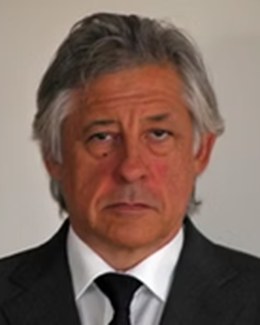
Jean Claude Combadazou
DDS, PhD, MICCMO
University of Toulouse, Toulouse, France
FRANCE
Session 5 · DAY 1 (Nov. 5, 2026) · 12:15–12:45 CET
Why symptoms are not enough: toward a functional and predictive approach to occlusal diagnosis
Abstract
The relationship between occlusion, neuromuscular function, symptoms, and posture remains controversial. One reason may be that most diagnostic approaches rely heavily on symptoms, clinical impressions, or morphological observations, while the functional expression of occlusal disturbances is rarely assessed objectively.
This presentation reports the findings of a clinical study using the MAC protocol, an integrated assessment combining surface electromyography, functional muscle testing, and stabilometric analysis. The objective was to determine whether symptoms, clinical findings, and instrumental measurements provide consistent information regarding the functional role of occlusion.
The results suggest that common symptoms such as cervical pain, temporomandibular complaints, headaches, tinnitus, and musculoskeletal discomfort are highly prevalent across patients, regardless of the severity of neuromuscular occlusal dysfunction. Similarly, chronicity, previous trauma, bruxism, and several associated factors showed limited discriminative value.
In contrast, functional parameters derived from neuromuscular recordings (MAC1) and postural assessment (MAC3) demonstrated a greater capacity to distinguish patient subgroups. These findings support the concept that occlusal diagnosis should not rely on symptoms alone but rather on the convergence of clinical, neuromuscular, and postural data.
The presentation will introduce a probabilistic and functional model of occlusal diagnosis and discuss its implications for clinical decision-making and treatment predictability.
Learning Objectives
- Understand the limitations of symptoms and clinical complaints in identifying occlusal dysfunction.
- Explain how neuromuscular and postural assessments can improve the functional evaluation of occlusion.
- Apply the concept of convergence between clinical, neuromuscular, and postural findings to support a more predictive diagnostic approach.
- Primary objective:To evaluate the coherence between clinical, electromyographic (MAC1a), and stabilometric (MAC3a) approaches in the assessment of the visual sensor, determining their diagnostic and functional relevance.
- Secondary objective 1:To identify the electromyographic criteria characteristic of a visual sensor dysfunction (≥30% reduction of anterior temporal activity without ≥10% decrease in masseter activity) and to correlate them with stabilometric variations.
- Secondary objective 2:To determine whether the functional clinical test accessible to the dental practitioner (force-resistance test, eyes open/closed) can serve as a reliable indicator of the presence or absence of visual sensor dysfunction.
Biography
Dr. Jean-Claude COMBADAZOU, DDS, PhD, MICCMO has been practicing exclusive occlusal therapy for more than 40 years. He has specialized in neuromuscular occlusion since 1982, following his encounter with Dr. Bernard Jankelson. A member of the ICCMO since 1986, he obtained his Mastership in 1994.He is a lecturer at the Faculty of Health, University of Toulouse, and a former hospital consultant in maxillofacial surgery (Toulouse).
He is also co-founder of the Académie Esthétique et Fonction and maintains a private practice dedicated exclusively to occlusion in Nice, France. Author of several articles on occlusion and posture, and co-author of the book “Occlusion neuromusculaire et rééducation fonctionnelle.”2025He currently serves as President of the French Section of the ICCMO.