
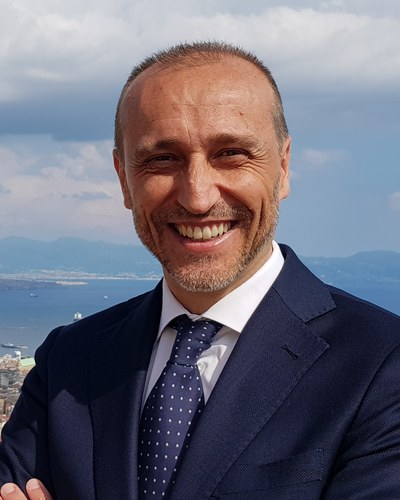
Francesco Cecere
DDS, Prof
University of Genoa, Genoa, Italy
ITALY
Session 34 · DAY 3 (Nov. 7, 2026) · 14:15–14:45 CET
The Hidden Life of an Aligner
Abstract
Clear aligner performance is shaped by a sequence of timedependent material phenomena that begin the moment the device is inserted. Thermoplastic polymers rapidly transition out of linear elasticity and enter a viscoelastic regime dominated by stress relaxation, creep, microdamage accumulation, and ultimately fatigue. These processes progressively alter the mechanical identity of the material, shortening the interval during which an aligner can deliver effective forces and defining the functional lifespan of every thermoplastic device.
This lecture traces the evolution of aligner materials across five generations, showing how each step—PETG, TPU, polymer blends, multilayer architectures, and finally shapememory polymers (SMPs)—represents an attempt to manage these unavoidable phenomena. Multilayer systems introduce structural strategies that redistribute deformation and delay force decay, while SMPs embody a conceptual shift: materials capable of expressing multiple sequential stages through thermally activated transitions.
Beyond their mechanical interest, SMPs also address the expanding environmental footprint of aligner therapy. Conventional protocols require large numbers of trays, generating substantial plastic consumption and waste. By enabling two activation phases within a single device, SMPs significantly reduce material usage, offering a rare convergence between biomechanical innovation and environmental responsibility.
The session focuses exclusively on material science—how polymers behave, degrade, and evolve under load—and highlights why future progress in aligner therapy will depend as much on improved digital planning and biomechanics as on advanced materials.
Learning Objectives
- Understand the sequence of viscoelastic phenomena—stress relaxation, creep, microdamage, and fatigue—that shape the progressive degradation of aligner materials.
- Differentiate the structural and mechanical characteristics of PETG, TPU, polymer blends, multilayer systems, and SMPs.
- Recognize how multilayer architectures and SMPs introduce new paradigms in material behavior, and how SMPs reduce material consumption and improve sustainability.
Biography
Francesco Cecere, DDS, is an orthodontist with over thirty years of experience and a strong commitment to placing patient wellbeing at the center of his work. Trained at the University of Naples and at the Justus Liebig University in Giessen under Prof. Hans Pancherz, he has developed recognized expertise in aligner biomechanics and digital orthodontics.
He lectures in postgraduate programs at the Universities of Messina and Genoa, where he serves as Adjunct Professor in Aligner Therapy. A frequent speaker at national and international congresses, he integrates biomechanics, material science, and digital planning into a coherent clinical vision.