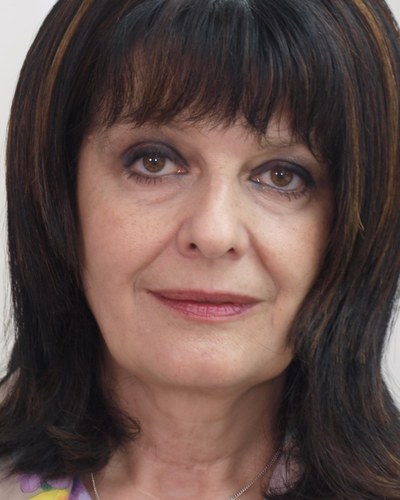
Asja Čelebić
DDS, MSc, PhD, Prof
University of Zagreb, Zagreb, Croatia
CROATIA
Session 32 · DAY 3 (Nov. 7, 2026) · 11:45–12:15 CET
Biomechanical Considerations for Long-Term Success of Implant Overdentures
Abstract
Functional loads applied to implant overdentures (IODs) are transmitted to both implants and supporting edentulous tissues, generating stress and strain within the surrounding bone.
Osteocytes act as mechanosensors, promoting bone formation under physiological loading and bone resorption when loading is insufficient or excessive. While physiological strain maintains bone homeostasis, overload may cause microdamage, contributing to peri-implant marginal bone loss and residual ridge atrophy.
Successful IOD treatment requires careful biomechanical planning to optimize load distribution. Key determinants include implant number, dimensions, position, and angulation; bone quality and quantity; residual ridge morphology; mucosal thickness and resiliency; patient-related factors such as age, systemic health, bite force, and chewing habits; attachment system selection; and prosthetic design, including interocclusal space, occlusal scheme, cusp inclination, contact pattern, denture support, and implant macro- and microdesign.
This lecture will review the biological basis of bone mechanobiology and current evidence on
biomechanical factors influencing stress distribution in IODs. Clinical strategies for preserving peri-implant and residual ridge bone, improving prosthesis longevity, and enhancing patient-reported outcomes will be discussed. Preliminary findings from our recent in vitro studies on titanium–zirconium mini-IODs will also be presented, focusing on the effects of unilateral chewing and implant number on load distribution and biomechanical performance.
Learning Objectives
- Explain principles of bone mechanobiology.
- Identify factors affecting load distribution in implant overdentures.
- Apply biomechanical principles to optimize IOD treatment and reduce overload-
Biography
Asja Čelebić is Professor Emeritus at the School of Dental Medicine, University of Zagreb, Croatia. She graduated in 1980, became a specialist in Prosthodontics in 1987, earned her PhD in 1993, and served as Full Professor in the Department of Removable Prosthodontics until her retirement in 2022. Her research focuses on oral health-related quality of life, implant-supported overdentures, removable prosthodontics, and orofacial physiology and function.
Professor Čelebić has authored numerous scientific publications, which have been cited more than 3,000 times in the Wo, SCC. She serves on the editorial boards of several indexed journals and has received multiple national and international awards for excellence in research, teaching, and clinical prosthodontics, including the title of Laureatus in Croatian Academy of Medical Sciences.